
JetX Strategies – Best Tips for Not Crashing
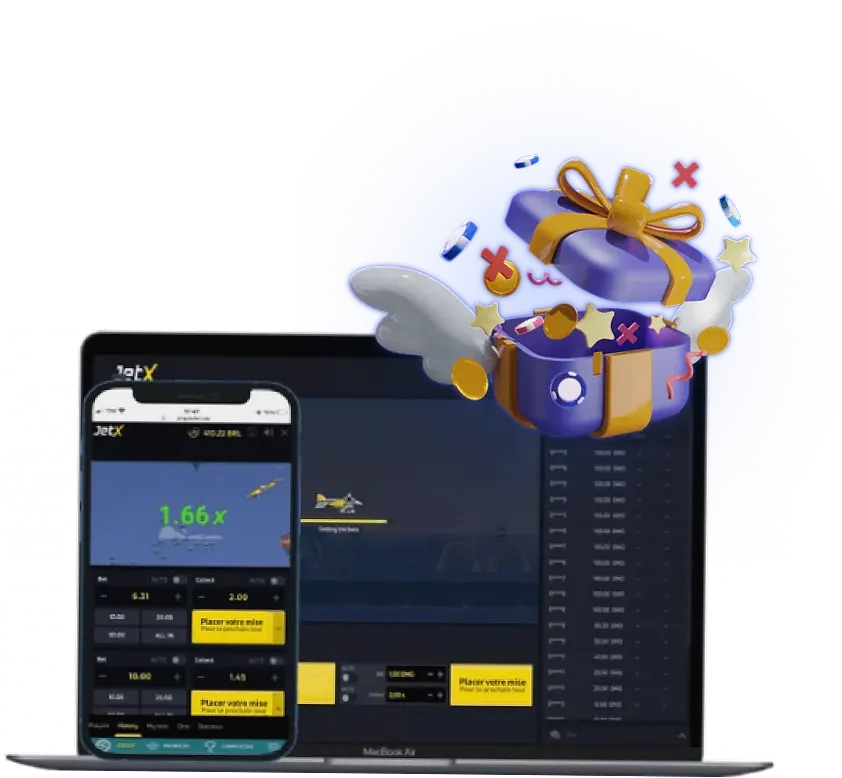
Most conversations about any JetX strategy begin with the same hope: that there's a hidden pattern waiting to be discovered, something that will make the multiplier just a little more predictable. But JetX isn't that kind of game, and the sooner players accept that, the clearer the path becomes. What you can't control is where the rocket falls. What you can control is how you behave before it does.
The real question isn't how to win JetX, but how to stay steady inside a game built to unsettle you. Strategy here isn't a formula; it's a way of making choices that don't collapse the moment the multiplier moves differently from what you expected.

4.9 / 5.0
Expert Rating
Up to €1,500 + Free Spins
Welcome Bonus
Yes
Free Spins
Up to 25%
Cashback
Positives
- Get up to €1,500 bonus plus free spins on your first deposits.
- Play popular slots, original games like Chicken Road and Plinko, and classic casino titles.
- Fast registration, secure payments and full mobile compatibility.
- Activate your bonus and start playing at PiperSpin today!

4.7 / 5.0
Expert Rating
Up to €2,500 + 300 Free Spins
Welcome Bonus
300
Free Spins
Up to 25%
Cashback
Positives
- Get up to €2,500 bonus plus 300 free spins spread across multiple deposits.
- Play popular slots, instant games and special promotional offers.
- Weekly bonuses, floating cashback and active tournaments available.
- Register now and start playing at WinShark Casino.

4.5 / 5.0
Expert Rating
200% up to €5,000 + 10% Weekly Cashback
Welcome Bonus
None
Free Spins
10% Weekly
Cashback
Positives
- Get a 200% bonus up to €5,000 on your first deposit plus 10% weekly cashback.
- Play popular slots, high-volatility games and fast instant games.
- Quick deposits and withdrawals, modern interface and full mobile compatibility.
- Register now and experience the speed of TurboWins.
Why Strategy Matters in a Game You Can't Predict
Most players start JetX believing that if they watch long enough, some JetX winning pattern will eventually reveal itself — a rhythm in the crashes, a tell in the way the multiplier hesitates, a streak that hints at what's coming next. But crash games don't reward observation in that way. The volatility isn't hiding a message.
That's why strategy matters more here than prediction. A JetX multiplier strategy isn't about guessing where the number will stop; it's about deciding how you'll behave when it starts rising faster than you expected. The game exposes impulses most players don't realize they have.
What strategy gives you isn't control over the multiplier. It's control over yourself, which is the only part of the game that isn't random.
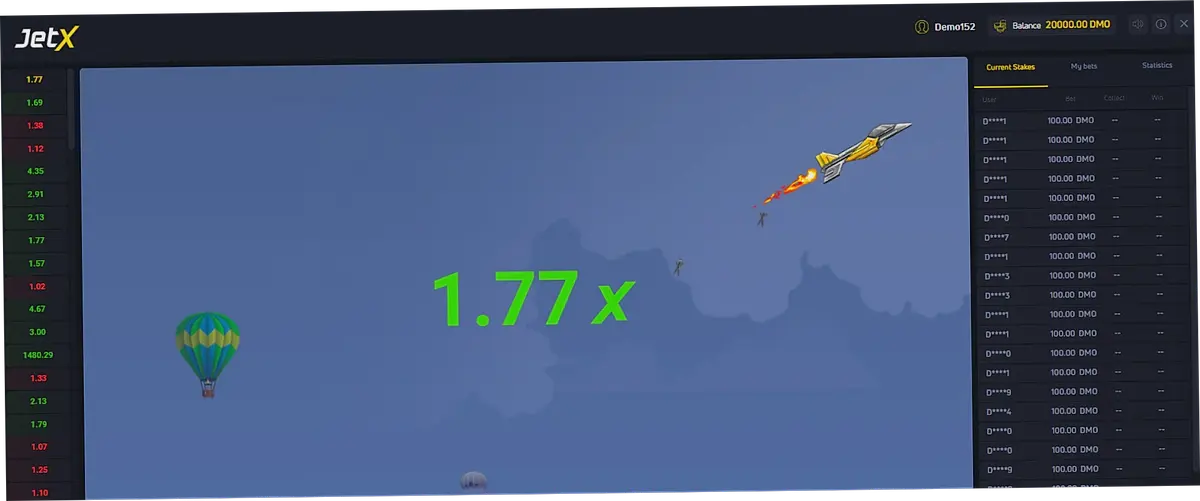
The Best Low-Risk JetX Strategy (1.10x–1.30x)
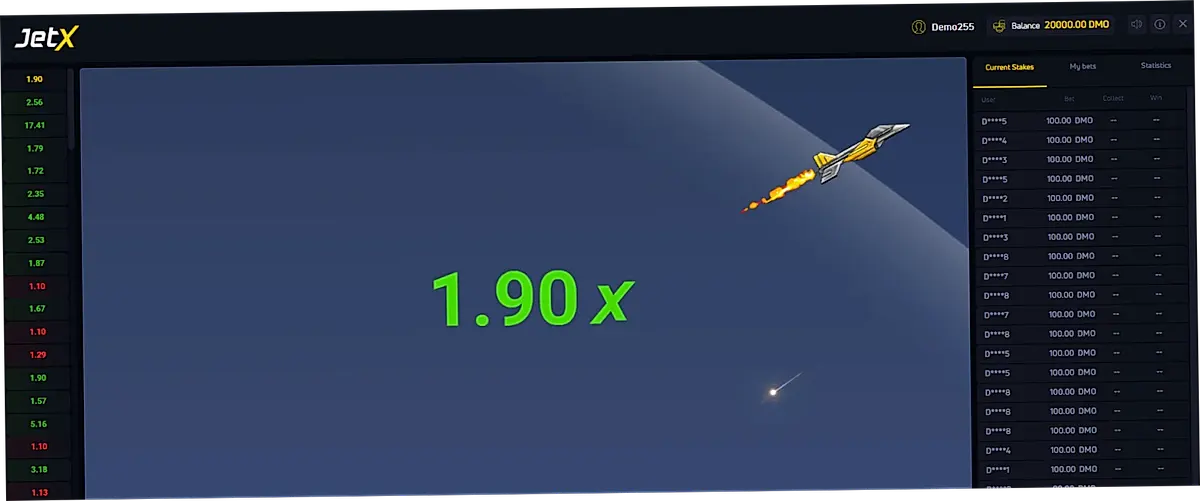
There's a kind of humility in the low risk JetX strategy that most new players overlook. Everyone wants the drama of a 20x climb, but those rounds arrive rarely and leave quickly. The quiet truth is that most of JetX's stability exists in the early multipliers. The game doesn't reward patience as much as it rewards restraint.
This version of JetX strategy has one simple rule: set your exit low enough that emotion doesn't have time to interfere. Cashing out at 1.10x–1.30x feels almost too cautious, but that's the point. You're not trying to outsmart the multiplier; you're trying to avoid the psychological drift that pulls players into higher risks without noticing.
It works best with small to moderate stakes. With a comfortable stake, the strategy becomes mechanical, almost meditative. The multiplier rises, you exit, you repeat.
Low Risk Structure| Target Exit | Risk | Who Should Use It | Notes |
|---|---|---|---|
| 1.10x–1.30x | Very low | New players, cautious minds | Best for discipline; avoids emotional decisions |
Low-risk isn't exciting. It's effective — and in JetX, that distinction matters.
Balanced JetX Strategy – The 50% Cashout Trick
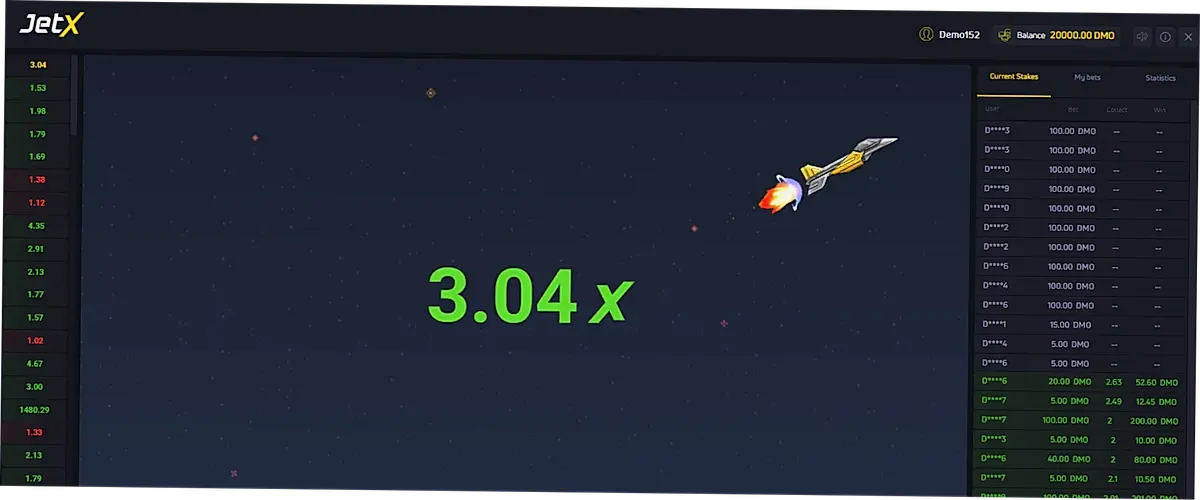
There's a quiet elegance to the 50% cashout trick that you don't fully appreciate until you've played enough rounds to feel how your judgment bends under pressure. Full cashouts demand conviction; holding the entire stake demands nerve. The half-exit sits somewhere between — a compromise that feels less dramatic but far more sustainable.
The beauty of this approach is that it splits the emotional burden. Half your stake leaves early, securing a small, steady gain. The other half stays exposed to whatever the multiplier decides to do next.
This is also where the JetX auto-cashout strategy becomes more than a safety feature. Set a modest automatic exit for the "second half" — 1.80x, 2.20x, sometimes even 3x. The preset protects you from irrational optimism.
| Action | Purpose | Impact on Player |
|---|---|---|
| Manual 50% early cashout | Locks small consistent gains | Reduces fear and tilt after crashes |
| Auto-cashout on remaining 50% | Aims for higher multipliers with discipline | Removes impulse-based exits |
| Fixed stake size | Keeps emotional swings small | Helps long-term consistency |
The strength of this strategy isn't in predicting good rounds — it's in surviving the bad ones without losing your head.
High-Risk Strategy – Hunting for 2x–10x Multipliers
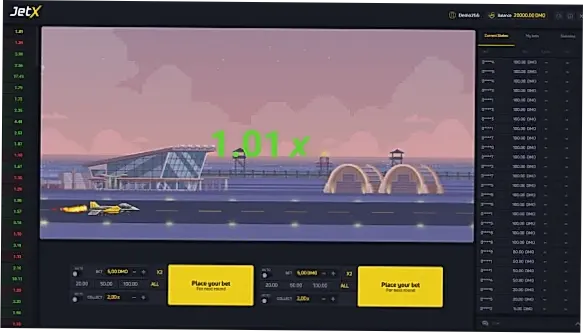
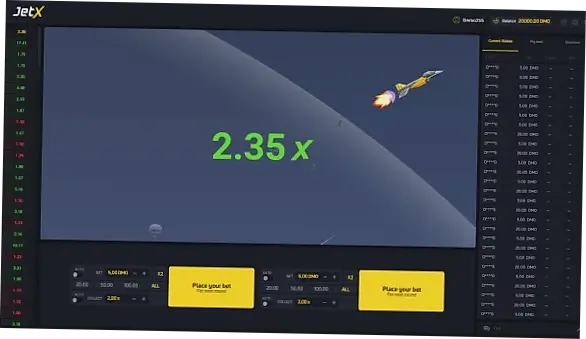
There's a certain allure to the high multiplier JetX strategy — the idea that if you can endure the slow climb and outwait everyone else, the game will eventually reward you with something dramatic. But this isn't a strategy built on comfort; it's built on volatility that most players underestimate until they're already inside it.
The core of this approach is patience. You sit through a series of early crashes, holding the belief that a longer run is coming. As a candidate for the best JetX strategy, it's seductive but dangerous. High multipliers do happen, but rarely enough that you must build strict limits before the round begins.
High Risk Structure| Target | Risk Level | Player Profile | Core Principle |
|---|---|---|---|
| 2x–4x | High | Confident, disciplined | Exit as soon as target hits — no negotiating |
| 5x–7x | Very High | Experienced risk-takers | Requires fixed stop-loss and pre-set auto-exit |
| 8x–10x | Extreme | Rarely sustainable | Only viable in short, controlled sessions |
4.9 / 5.0
Expert Rating
Up to €1,500 + Free Spins
Welcome Bonus
Yes
Free Spins
Up to 25%
Cashback
Positives
- Get up to €1,500 bonus plus free spins on your first deposits.
- Play popular slots, original games like Chicken Road and Plinko, and classic casino titles.
4.7 / 5.0
Expert Rating
Up to €2,500 + 300 Free Spins
Welcome Bonus
300
Free Spins
Up to 25%
Cashback
Positives
- Get up to €2,500 bonus plus 300 free spins spread across multiple deposits.
- Play popular slots, instant games and special promotional offers.
4.5 / 5.0
Expert Rating
200% up to €5,000 + 10% Weekly Cashback
Welcome Bonus
None
Free Spins
10% Weekly
Cashback
Positives
- Get a 200% bonus up to €5,000 on your first deposit plus 10% weekly cashback.
- Play popular slots, high-volatility games and fast instant games.
JetX "Patterns" — Are They Real?
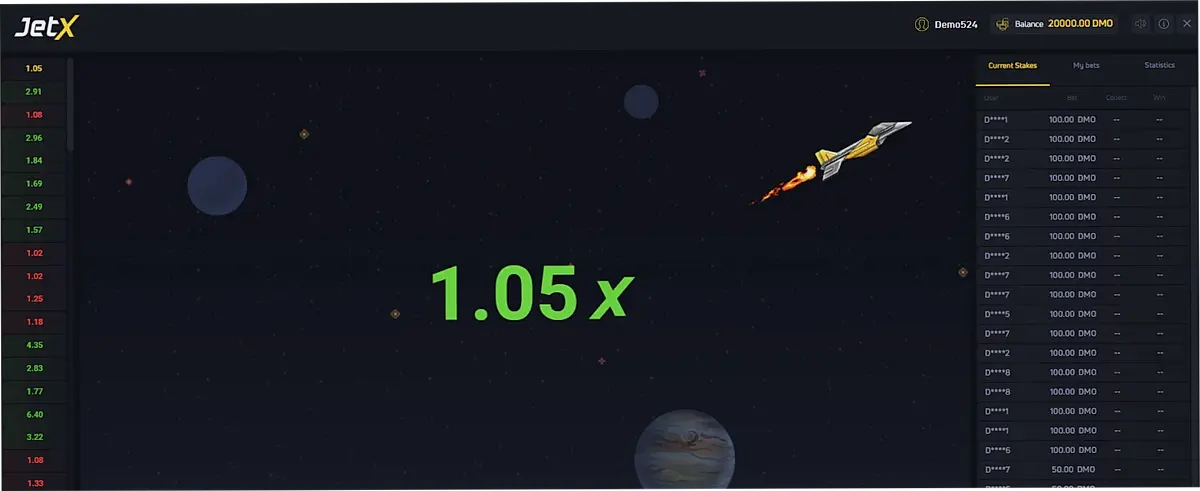
If you spend enough time in gambling communities, you start seeing the same claim appear again and again: that today's game will behave differently, that there's a hot window, a pattern, a lucky period. People share screenshots and streaks with the confidence of a weather report.
But JetX isn't built that way. Crash games don't store momentum or mood. There's no internal clock that makes one hour "hotter" than another. The multiplier doesn't remember its past, and it doesn't reward your patience for waiting.
The truth is simple: patterns in JetX aren't real, but the emotions that create them are. And that's what you need to manage — not the multiplier.
How Bankroll Management Protects You
If there's one lesson players learn late — often after they've paid for it — it's that bankroll management is the only part of JetX that isn't negotiable. People search for formulas, for timing tricks, for anything that feels like an edge, but the closest thing to an actual advantage is knowing how much you're willing to lose before the round even begins.
Fixed stakes offer emotional predictability. When you wager the same amount each round, the game stops feeling like a referendum on your confidence.
The real shield isn't in the method; it's in the limits. A stop-loss keeps you from chasing. A win cap keeps you from drifting into greed disguised as momentum. You don't win by beating the multiplier. You win by avoiding the versions of yourself that can't walk away.
Top Rated Casinos